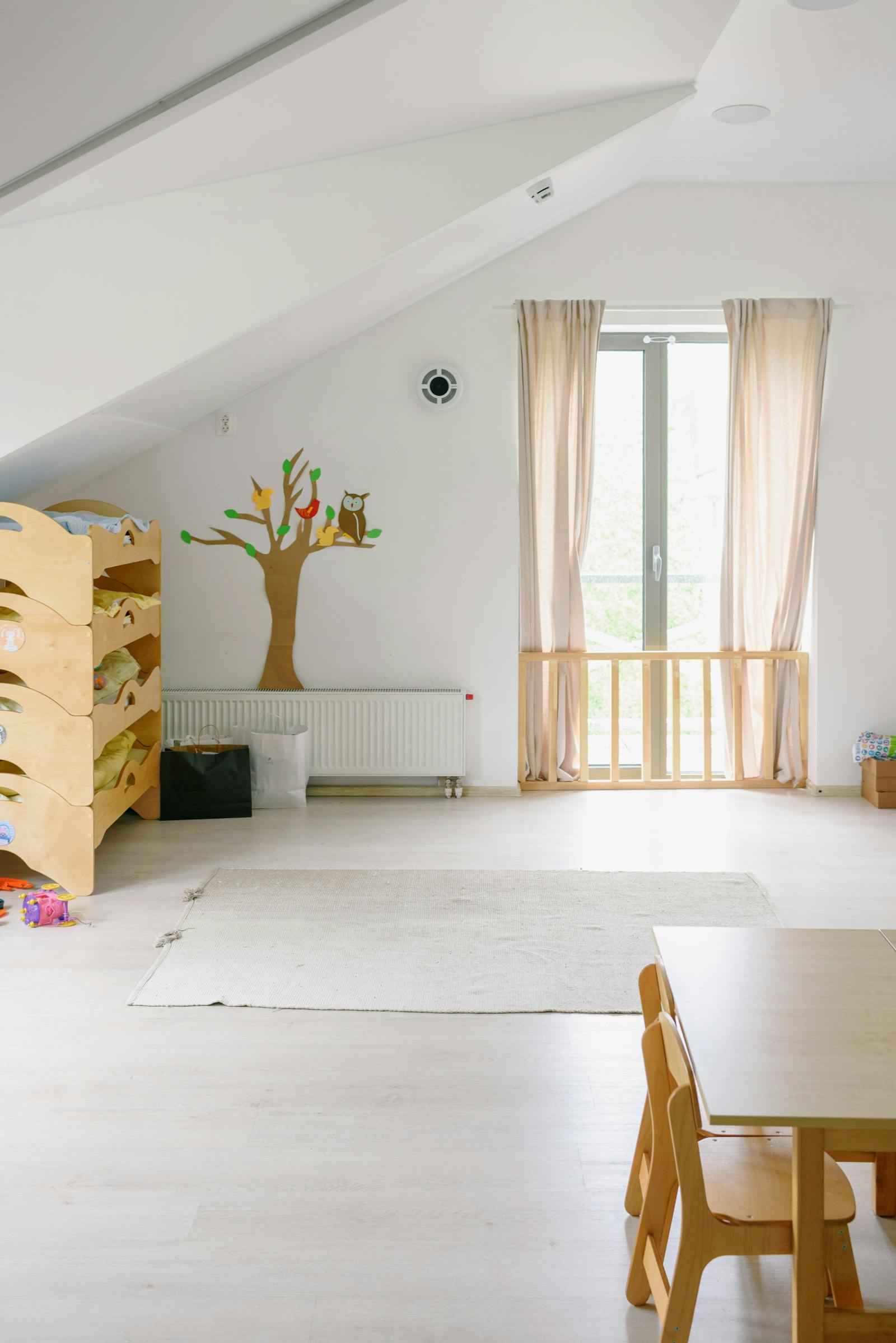
A playroom built for a two-year-old rarely suits a seven-year-old, and the version that delights a seven-year-old can feel babyish by ten. Most of us respond by rebuilding the room every couple of years, which is expensive and a little disheartening. The better approach is to design once for change: choose a structure and a set of pieces that quietly shift purpose as your children grow, rather than a fixed scene that has to be torn down and replaced.
This guide walks through the decisions that make a playroom genuinely long-lived, from the bones of the layout to the furniture and storage that carry the most weight over time.
Start with zones, not a theme
Themes date quickly. A room built around a single character or colour story can look tired within a year and gives you nothing to build on when interests move on. Zones, by contrast, are timeless because they map to how children actually use space at every age.
Three zones cover almost everything:
- An active zone for movement, building, and imaginative play, kept as open floor as possible.
- A quiet zone for reading, drawing, and winding down, ideally in a corner away from the door.
- A making zone with a surface for art, puzzles, and projects, plus the materials to support them.
The proportions of these zones shift with age. Toddlers want most of the room given to open, soft floor. Older children need more table space and more storage for collections and ongoing projects. Because you are adjusting proportions rather than rebuilding, the room evolves without a full refit.
Choose furniture that changes jobs
The single most useful principle for a growing playroom is to favour pieces that do more than one thing and can be reconfigured as needs change. Fixed, single-purpose furniture is the enemy of longevity.
Modular soft seating is a strong example. A modular play couch can be a fort and an obstacle course at three, a reading lounge at six, and casual floor seating for friends at ten. Because the pieces come apart and rebuild, the same furniture keeps earning its place while the play around it matures. It is exactly the kind of buy-once item that justifies its cost over years rather than seasons.
Apply the same thinking elsewhere. A low table that suits toddlers can be raised with leg extensions later. Storage cubes can become a bench, a step, or a room divider. The test is simple: before you buy, ask what this piece becomes in three years. If the honest answer is “landfill”, keep looking.
Get the storage height right
Storage is where most playrooms quietly fail. The usual instinct is tall shelving with lots of capacity, but height your child cannot reach is height they cannot use, and a room they cannot reset themselves is a room you will be tidying forever.
Keep daily-use storage low and open so children can both take things out and put them back without help. Reserve higher shelving for adult-managed items: the toys you rotate, the craft supplies that need supervision, the keepsakes. As your children grow taller and more responsible, you simply move more of the room into their reach.
A few rules that hold up over time:
- Open bins and baskets beat lids for everyday toys, because one extra step is enough to stop a four-year-old tidying up.
- Label with pictures first, then words once reading begins, so the system grows with literacy.
- Leave roughly a third of your storage empty at setup. Collections only ever expand.
Protect the floor early
In a room built around floor play, the floor itself is a surface worth protecting from the start. Hard flooring is unforgiving for tumbles and tiring for long stretches of sitting, while carpet traps the spills and crumbs that any making zone produces.
A wipe-clean foam mat solves both at once: it cushions active play and reading alike, and it shrugs off the paint, glue, and snacks that come with the territory. Choose a neutral tone and a generous size so it anchors the active zone without dictating a colour scheme you will tire of, and so it still fits when the play around it grows up.
Build in a calm corner
Every playroom benefits from one spot designed for stillness. Children regulate themselves more easily when there is a clear, soft place to retreat to, and a calm corner remains useful at every age, shifting from a babies’ nook to a reader’s hideaway to a teenager’s quiet seat.
You do not need much: a soft floor surface, one comfortable spot to settle into, good light, and a small shelf of books within reach. Keep it visually quieter than the rest of the room, with fewer colours and less on display, so it reads as a different kind of space the moment your child steps into it.
Leave room to grow
The most common mistake is filling a playroom completely on day one. A room with no spare capacity has nowhere to put the next interest, the next collection, or the next stage, so every change forces something out.
Plan for expansion instead:
- Keep one wall relatively clear for whatever comes next, whether that is a desk, a reading nook, or a hobby station.
- Resist buying ahead for ages your children have not reached. Interests are hard to predict and easy to get wrong.
- Revisit the room twice a year, ideally at the start of a new school year and again mid-year, and adjust the zone proportions to match where your children actually are.
A playroom that grows is not about buying the cleverest furniture or the most storage. It is about choosing a flexible structure, picking a small number of pieces that change jobs over time, and leaving deliberate room for who your children are becoming. Design for change once, and you spend far less time, money, and effort rebuilding later.